We had all brought a bunch of the side ingredients, but if you're going to be eating raw or nearly raw meat and fish, you want to make sure it is F-R-E-S-H. So we started the day at DC's fantastic Eastern Market.


One thing you need to know about Chef Spouse and Mad Kitchen Scientist - they should not be left alone with credit cards and a vast array of amazing potential ingredients.
We had planned to get some beef and some tuna steaks (for the tartare) and some white fish (for ceviche).
What we got?
An entire eye of round, several pounds of tuna steak, shrimp, octopus, squid, red snapper, and Chilean sea bass.
That was, as you may note, a LOT of protein. And did I mention that, due to other schedule constraints, we only had about 4 hours? From when we started out?
We figured we needed to start with the ceviche first, since it would need time to cure. Our first test was different citrus acids. We prepared a base of a combo of the sea bass and snapper with red onion, jalapeno, garlic, and salt, divided it into 4 ramekins, and covered each with one of:
lime
lemon
orange
grapefruit
We also prepped the shrimp with lime and pineapple juices, leaving us with the cephalopods. We divided the squid into two groups: one with lime and pineapple, the other with grapefruit. We also divided the octopus into two: one with lemon, one with lime.


Everything went into the fridge, and we moved onto tartare creation.
First, Chef Spouse made some wonton crisps: olive oil and sesame seeds, 9 minutes at 350.

Then Chef Spouse hand-chopped the tuna, and we each made a tartare.
Well, the FIRST thing we did was have some of the gorgeous tuna plain on the crisps. Other than the fact that it needed a shake of salt, it was divine.

Chef Spouse made a tuna tartare with coconut, sesame oil, rice wine vinegar, ginger, lime, and soy sauce that he served on cucumber slices (fancy!).
Mad Kitchen Scientist made a tuna tartare with sesame oil, soy sauce, ginger, sesame seeds, and scallions.
The Executive Committee made a tuna tartare with wasabi, soy sauce, scallion, and jalapeno.
Mama IA by Day-Chef by Night made a tuna & fruit tartare with mango, coconut, onion juice, pineapple juice, and Hawaiian alaea salt.
I made a tuna tartare in the classic style: olive oil, lemon, capers, salt, red onion, chives, and parsley.
We ate them immediately, because by this point, we were STARVING. Verdict? All were good. You'd choose which direction to go based on the rest of the meal. And the cucumber slices provided a very nice platform.
Then it was on to the beef and the IA by Day-Chef by Nights' fun surprise: amazingly fresh venison.
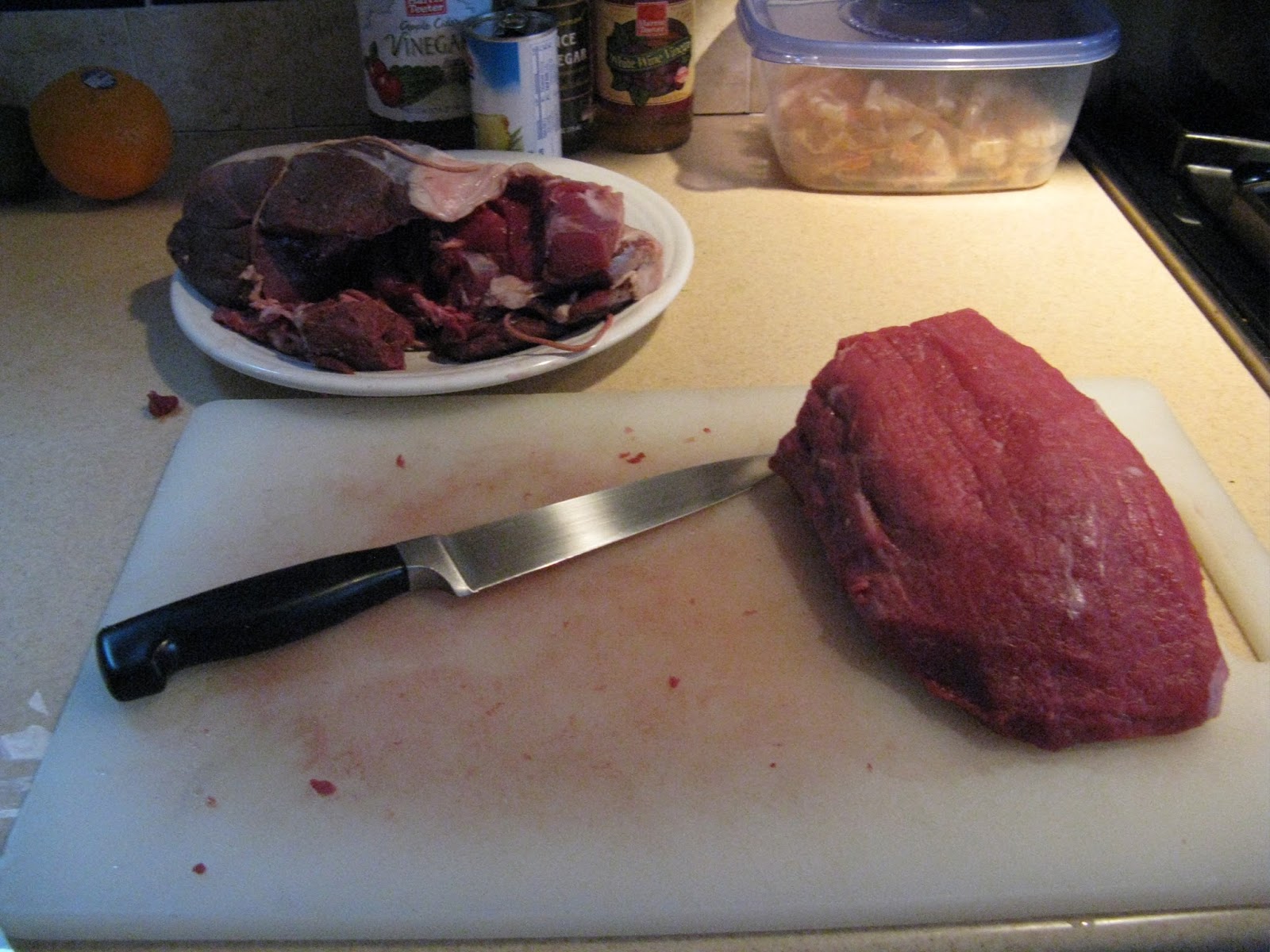
We tested hand chopped versus ground by the Kitchen Aid, the beef versus the venison (obviously), and getting the heat from jalapenos versus serranos versus chilies in adobo sauce. All were based on the same fundamental recipe. Papa IA by Day-Chef by Night also put together a chocolate cherry version with the venison.
The best was the classic recipe, hand chop...venison. The various pepper versions were good, but we'd omitted the capers so as not to muddy the flavors. And we missed them big time - there's a reason they're a classic.

After we got through the tartares, we decided it was time to check on the ceviche.

One problem we ran into is that we didn't really have enough time. The squid and octopus didn't cook fully - they weren't bad, but they also weren't done.
Also, we were trying to test the acids, so we didn't "finish" the ceviches - no avocado, no olive oil, no salt adjustment, no cilantro - just the original red onion, garlic and jalapenos.
Even though they were mixed together, it was easy to tell that the sea bass was better than snapper. On the citrus side, the lime and grapefruit won over the orange (which was not acid enough to cook the fish) and the lemon (the flavor was TOO strong). But ultimately, they were all pretty one-dimensional.
What we ended up doing was combining all the differently citrused white fishes in a bowl, finishing them with avocado, olive oil, cilantro and more salt, and then divvying them up. They were, unsurprisingly, better the next day.
What did we drink? I made a batch of The Cuke, The Executive Committee brought a sort of sangria base (fruit in pomegranate juice), which we tried with both rum and a resposado tequila. Tequila was the hands-down favorite. When we busted out the beef, we moved over to martinis made with Spruce Rogue gin.

Oh - the shrimp? The thing is, you can't eat raw shrimp. And it never cooked. It wasn't even close to cooked. You know how some restaurants serve shrimp ceviche? They're totally parboiling it first. More than 24 hours later, the shrimp still wasn't cooked. We finally gave up, treated it like a marinade, and grilled it.


 Posts
Posts


